Kamailio Advanced Training
March 25-27, 2019, in Washington DC, USA
Click here for more details!
Learn how to build RTC services with Kamailio!
Tuesday, May 24, 2016
Kamailio World 2016 - Video Recordings
Wednesday, March 30, 2016
Kamailio v4.4.0 Released
Friday, February 12, 2016
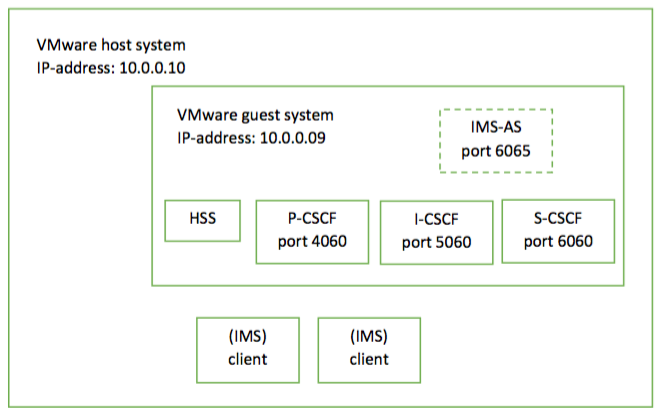
Kamailio – the IMS Getting Started Box
- The VMware image:https://www.dropbox.com/s/pwwx009hiigt27v/Debian_8.2-step5-basicKamailio%26basicIMScore.zip?dl=0
- The log-file and the config-files: https://www.dropbox.com/s/ehkzi9pbhlp7njc/Kamailio-IMS%20config-files.zip?dl=0
Wednesday, June 10, 2015
Kamailio v4.3.0 Released
Friday, March 27, 2015
Kamailio World 2015 – VoLTE Testbed and Demo
Tuesday, November 11, 2014
Kamailio v4.2.1 Released
# git clone git://git.sip-router.org/kamailio kamailio
# cd kamailio
# git checkout -b 4.2 origin/4.2
Thursday, November 6, 2014
Kamailio v4.1.7 Released
# git clone git://git.sip-router.org/kamailio kamailio
# cd kamailio
# git checkout -b 4.1 origin/4.1
Sunday, October 19, 2014
Kamailio 4.2 Tips: #6 - Multi-part body management
Kamailio 4.2 is a big step forward to simplify the management of multi-part body from configuration file. Textops module introduced three dedicated functions:
- set_body_multipart( [txt, content_type] [, boundary])
- append_body_part(txt, content_type [, content_disposition])
- remove_body_part(content_type)
append_body_part("7e Od 04 55 75 69 20 4d 61 6b 65 43 61 6c 6c",
"application/vnd.cirpack.isdn-ext",
"signal;handling=required");
Resulting content in the body is:
... Content-Type: application/vnd.cirpack.isdn-ext Content-Disposition: signal;handling=required 7e Od 04 55 75 69 20 4d 61 6b 65 43 61 6c 6c --unique-boundary-1 ...
Removing some part, can be done with:
remove_body_part("application/vnd.cirpack.isdn-ext");
Enjoy it!
Wednesday, October 8, 2014
Kamailio Git Branch 4.2 Created
Thursday, March 20, 2014
Kamailio 2013 Awards

With two major releases across 2013, respectively v4.0.x and v4.1.x, and having our first dedicated conference for Kamailio project, making the decisions for these awards was harder than ever so far.
Ladies and gentlemen, next are the categories and the winners!
Blogging
- Kristian Kielhofner - blog.krisk.org - a veteran in VoIP, with consistent activity over the years in Asterisk, FreeSwitch and Kamailio, Kristian wrote many good technical articles, even inspiring the development of gzcompress module in Kamailio
- Jose Luis Verdeguer - blog.pepelux.org - (Spanish) a comprehensive tutorial about creating a SIP honeypot with Kamailio. Jose is involved in securecall.org, a project aiming to provide a service for secure communications
- baresip - an open source, bsd licenses, full SIP stack and soft phone, able to handle signalling over IPv4/IPv6 UDP, TCP and TLS, with support for ICE, TURN as well as audio and video. The project is developed by Alfred E. Heggestad, who did many contributions to SER and Kamailio over the time
- lumicall - an open source Android softphone targeting to provide similar experience to proprietary Viber service, using your own SIP server or the one hosted by the project. The main developer is Daniel Pocock, a person with vast activity in open source real time communication projects and a promotor of Kamailio
- Daniel Tryba (pocos.nl) - very active on mailing lists, he has been assisting many people to sort out SIP routing issues with Kamailio
- Vitaliy Aleksandrov (wildix.com) - involved in users and developer forums, he provided many patches approaching quite complex corner cases for TCP and WebSocket extensions
- rtpproxy-ng - by Richard Fuchs (sipwise.com) - the new generation of the module controlling the RTP relay application, typically used for NAT traversal. The control protocol reuses bencode format, allowing to extend it easier. The main target is usage together with mediaproxy-ng from Sipwise, a replacement for old RTPProxy, which also has the capability of encrypting/decrypting RTP streams to allow classic SIP phones to communicated with WebRTP endpoints (afaik, SDES implemented (but deprecated by IETF, still supported by some versions of web browsers) and DTLS on the way)
- mohqueue - by Robert Boisvert - rather interesting new module, allowing to use Kamailio for building call queues. A media server is needed only for playing music on hold, Kamailio taking care of queue management. Now your turn to build thousands of queues and blog about!
- Camille Oudot, Orange France - he joined the development team, helping to improve and maintain the large set of IMS related modules
- Victor Seva, Sipwise, Austria - one of the most active developers during past years, touching various areas such as core, debugger, app_lua, registrar and usrloc, documentation and packaging
- Alan Duric - on of the pioneers in VoIP and co-founder of Telio in Norway, involved in many ventures related to real time communications, Alan was supporting and using our project from the early years of SIP Express Router
- Victor Pascual Avila - involved quite a lot in standardisation groups, Victor keeps referring to Kamailio for many new specifications we have implemented, such as SIP over WebSocket for WebRTC, at the events he participate across the world and via webrtchacks.com blog
- Bezeq - the main telecom company in Israel - if you ever thought that Kamailio has limitations on what one can do with it, approach Uri Shacked from Bezeq and see how he designed an IVR system using Asterisk as simple DTMF detector and Kamailio doing the business logic for the IVR menu
- Voxbone - the international DID provider based in Belgium - had the courtesy of contributing back to Kamailio project the module for handing SIP-I/SIP-T message, via Torrey Searle who became a registered developer of our project
- Gonicus, Germany - gonicus.de - a company focusing on using open source technologies, deploying IP telephony systems to large enterprises
- 2600hz, USA - 2600hz.com - offering a hosted PBX service relying on Kazoo platform (which combines Kamailio and FreeSwitch), recently including mobile network integration, thus a straightforward way to become MVNO in USA
- AstriCon - celebrating 10 years of existence, AstriCon 2013 gave the chance for many Kamailio developers and users to meet last autumn in Atlanta. It was really a great show, with presentations related to Kamailio from Peter Dunkley, Klaus Darilion and Daniel-Constantin Mierla (aka me), surrounded by friends such as Fred Posner, Alex Balashov, Olle E. Johansson, Torrey Searle, Randy Resnick and the entire Asterisk crew
- Kamailio World - it was our first edition of a dedicated event for Kamailio project, touching technical aspects and the business environment around it. With participants from across 5 continents, our expectations were exceeded and we are looking forward to the second edition to happen soon in Berlin, during April 2-4, an edition already with more confirmed participants and content
- University of the Aegean, Karlovassi, Greece - www.aegean.gr - involving Kamailio in academic activities, such as the article A Privacy-Preserving Entropy-Driven Framework for Tracing DoS Attacks in VoIP (pdf), presented at International Conference on Availability, Reliability and Security (ARES Conference)
- University of Florida, Gainesville - www.ufl.edu - involving Kamailio in academic activities, such as the article A Distributed IP-Based Telecommunication System Using SIP, published in International Journal of Computer Networks & Communications
- Dan York - with a long record related to VoIP security, he does and extensive work at Internet Society in promoting new, better and more secure technologies for real time communications, such as IPv6, TLS/encryption, DNSSec. Dan constantly advertised Kamailio at world wide events and online articles about implementations of those specifications .
- David Duffett - running Telespeak UK and acting as Community Manager for Asterisk, David has been always highlighting the benefits of using Kamailio and Asterisk together as complement applications to get the best of what can be deployed for specific needs of large real time communication platforms.
Wednesday, March 19, 2014
Kamailio World 2014 - two weeks to go
Do not hesitate to approach the organizers if you want to be put in contact with other participants. Tell us what you are interested in and we will guide you to the appropriate persons and companies. It is the second edition and the event is growing. We are pleased to have a large number of returning participants (proving that the first edition has met their expectations) as well as new attendees. Spring was quite sunny so far in Berlin, we hope for a nice weather during the event, so everyone can enjoy the full time during the stay in the city center. Eagerly looking forward to the event!
Tuesday, February 4, 2014
Kamailio World 2014 – New speakers and presentations
Monday, July 22, 2013
Details on charging in IMS with Kamailio
Friday, May 17, 2013
What is the IP Multimedia Subsystem (IMS) in Kamailio 4.0?
Thursday, April 25, 2013
Kamailio v4.0.1 Released
# git clone –depth 1 git://git.sip-router.org/sip-router kamailio
# cd kamailio
# git checkout -b 4.0 origin/4.0
Saturday, May 7, 2011
Two technologies striking back in VoIP - part II
What killed the trend? Did everyone deploy it and this was it? No, there were many deploying pre-IMS, half-IMS or IMS-ready solutions (most of them being just some re-labeled existing system by the marketing/sales departments of some vendors) for astonishing amount of money, bringing back to them no other benefit that a SIP server with registrar, location and proxy services could deliver.Many of us, including me, I was reticent about IMS. It was not because things like being a bad idea, but seeing who is behind the movement (read old telco vendors), organizations with few understanding of new communication demands over IP. They couldn't have it pushed beyond voice. Remember, IMS concept promised a framework to offer voice and new real time applications to mobile networks.
But voice was there, it had a dedicated channel (no IP) even in 3G networks. So an IMS with nothing more than voice brought zero add-value to services. There was no real return of investment for most of those deploying x-IMS.
Things are changing, demands for data over mobile networks is increasing, the operators are forced to go to 4G or what so ever will be next. Here we talk about technologies like LTE. With such technologies, there is no longer a dedicated channel for voice. Everything is IP.
Therefore the operators need a system that has to route the voice over LTE. One of the options, the natural one, is IMS.IMS is a lot about defining standard interfaces, to handle services such as: interconnect, roaming, billing, access policies a.s.o. Not bad at all. Many concepts map directly, entirely or partially, over the standard SIP concepts, e.g., HSS (Home Subscriber Server) and SIP Registrar/Location Server.
It is almost mid of 2011, for few years there was a gap in (public and high) interest regarding IMS. But now is different. Starting with the end of last year, more and more people showed real interest in bringing IMS extensions in Kamailio. They are in the source code repository for some time, still under heavy work, but you can run it -- see the tutorial pointed at this web page.
First the big advantage for companies looking to use it is trying it at very low cost. Although the IMS extensions were available for some long time for free through OpenIMSCore project (which is part of our SIP-Router.org development eco-system), this time there are made available on top of a very stable VoIP/Telephony engine. All the IMS extensions are modules, so the stability of the other extensions and core is not affected at all.
More over, apart of voice, Kamailio (being the core of the IMS solution) offers add-on services such as presence and instant messaging out of the box. Furthermore, existing embedded programming language interfaces to Lua, Perl or Python offer a straightforwards and easy way to implement RTC goodies (e.g., see some slides with a tutorial for sending notifications to Twitter on missed calls).
I summary, with the IMS extensions on top of Kamailio:
- free-as-in-beer system that anyone can try before deciding to pay integrators for professional installation
- rock solid underneath system
- access to other hundreds of RTC extensions
- services beyond voice
- embedded scripting languages
- open source, vendor-unlocked environment, with many companies able to offer professional consultancy services
First part of writing about technologies striking back in VoIP was about IPv6. Same like there, things seems to get serious now (repeating the disclaimer from first part: the statements are made based on the activity inside our mailing lists, looking back at the discussions about these subjects in the past 10 years).
On our mailing list, Jason Penton (new developer to work on IMS extensions), revealed his company plans to deploy IMS in several countries across Africa (Uganda, Tanzania, Nigeria & DRC -- click to see the message).
The development of the IMS extensions is coordinated by Carsten Bock, long time developer and member of management team of Kamailio.
If you are interested in IMS, Carsten (along with other developers) will be present at Kamailio booth during LinuxTag 2011, in Berlin. We will be glad to talk with you, just drop by. We have several visitor passes that we can give away, write me an email if you are interested. Of course, flyers and giveaways will be on site, more details about developers availability at:
Sunday, February 20, 2011
Kamailio 2010 Awards
The past year was full of events and achieved very important milestones set for our project. First of all was the release of version 3.0, the first as a result of the integration between Kamailio and SIP Express Router (SER), the two being since then one application - see more about 3.0 release here.

More over, another major release was done in 2010, v3.1, worked out by an enlarged development team, brought a big list of new features, including full asynchronous network communication (even TCP and TLS) - see more about 3.1 release here.
All together, 2010 was great, therefore the awards got two new categories - Innovation in Communications for those using Kamailio for services beyond voice and Academic Environment for using Kamailio in research and educational networks.
I was not able to list everyone I wished, trying to stick to the tradition of having each of the category with two winners, listed in alphabetic order. As a rule, I tried to choose people and companies that were not selected in the past editions, but of course I want to thank to everyone contributing to and using Kamailio during 2010.
Let the show begin...
Blogging:
- Venture VoIP – very good coverage of Kamailio (OpenSER) & Asterisk related news, like the integration tutorials between the two open source telephony applications. Web link: http://www.venturevoip.com/news.php
- VoIP Today – VoIP news site always keeping an eye on our project activities, publishing news about our releases and major events around the project. Web link: http://www.voiptoday.org
- SEMS - (aka SIP Express Media Server) programmable and lightweight SIP back to back user agent and media server written in C++, offering features such as signaling B2BUA, Voicemail, audio conferencing, SBC, IVR, a.s.o. The project shares many developers of Kamailio and it has the roots in the same research institute as Kamailio and SER, FhG FOKUS Berlin, Germany. Web link: http://www.ipterl.org/sems/
- SIP:Provider – full featured VoIP servicing platform using Kamailio for SIP routing, offering web management interfaces for administration and users. Among features: postpaid billing, call forwarding, call blocking, speed dial, voice mail, click-to-dial, peering, least cost routing - click here for more. Web link: http://www.sipwise.com/products/spce/
- Alex Hermann - one of the community members that spotted corner case issues and came with detailed report and patches most of the time. In addition he added enhancements to newly XAVP concept and provided straight answers on our mailing lists. Alex works for SpeakUp, Netherlands
- Timo Reimann - omnipresent at our developer meetings and events as well as on our mailing lists. His development involvements brought many modules, such as dialog, to better structure. Timo works for 1&1, Germany
- app_lua - the new module allows execution of embedded Lua applications. The latest enhancements to this module allowed writing a pretty complete Kamailio configuration for SIP routing only in Lua, see this page for it. You can see also a presentation done at Fosdem 2011 about Twitter Notifications from Kamailio Configuration - click here for it. Web link: http://kamailio.org/docs/modules/stable/modules/app_lua.html
- presence_conference - this module came as a result of Google Summer of Code, successfully completed by Marius Ovidiu Bucur. Done together with SIP Communicator (btw, the best cross-platform open source SIP softphone I met so far), this extension based on RFC 4353 and 4575 added to our SIMPLE Presence implementations, which along with the newly added embedded XCAP server makes Kamailio the most complete SIMPLE Presence Server implementation that can be found in the open source world. Web link: http://kamailio.org/docs/modules/stable/modules_k/presence_conference.html
- Carsten Bock - member of Kamailio Management team, working for Telefonica O2, Germany, Carsten worked lately a lot with dispatcher, dialog and usrloc modules, plus the newly started efforts to the IMS extensions.
- Marius Ovidiu Bucur - the new developer landed in our project as a result of participation to Google Summer of Code. A student at Polytechnics University of Bucharest, working now part time for 1&1, Marius continued to contribute to Kamailio's SIMPLE Presence server, his latest work to this component focused on increasing the scalability (the code already in our GIT repository).
- Fred Posner - I had the opportunity to meet Fred personally during the last year, a person that carries an amazing bag of experience in VoIP and security. Fred continuously helped in promoting Kamailio, on mailing lists, IRC channels and public events. Besides that, his baker skills are visible at amazing good looking and tasteful cakes by Dream Day Cakes (and yes, I did taste some of them during my last trip in USA, thanks Fred & Yeni - but just trust me, don't look to their site, after that it might be too late and it may cost you a lot by not being able to stop yourself keep ordering).
- Olle E. Johanson - probably it is not really much to add about Olle, the VoIP Olle. However, last year Olle conducted super-human efforts to keep SIP world ahead in communications. Kamailio was always a part of that. I mention here only a few of them: SIPit in Stockholm (organized by Olle himself) where Olle and I setup Kamailio based TLS and IPv6 testbeds to be used by anyone attending there. His VoIP Forum articles kept heads up in regards to IPv6 and security in SIP, then, his involvement made possible the switch to SIP in the entire Portuguese educational network, running now about 300 pairs of Asterisk and Kamailio - deployment presented by Ruben Sousa at Astricon 2010.
- Flowroute - early adopter of Kamailio, Flowroute, acting mainly as a SIP interconnect broker and providing quality VoIP routes, keeps pushing the SIP server towards innovation, always looking for better performances and proper security in regard to attacks and fraud detection. Flowroute is also actively involved in promoting Kamailio project, hosting related events at their premises. Web link: http://www.flowroute.com
- XtraTelecom – Spanish telephony provider focused on enterprise market, offering SIP trunking services along with hosted PBX’s. With Inaki Baz Castillo in their team, member of Kamailio's management as well, XtraTelecom relies on a capable group of engineers that can only ensure quality of service. Web link: http://www.xtratelecom.es
- NG Voice - the team coordinated by Carsten Bock working with IMS extensions in Kamailio, also developing other IMS infrastructure applications. It is a new initiative with a lot of potential in business environment in the near future. Web link: http://www.ng-voice.com
- TeamForest - every year, the number of companies offering Kamailio services is growing in USA. Knowing now them personally, TeamForest is another company that you can trust theirs skills in deploying Kamailio and offering professional support services. Web link: http://www.teamforrest.com
- Cluecon - after missing the 2009 edition, being busy in that year to complete the integration between Kamailio and SER, the 2010 edition was amazing for me. In the first day only, Kamailio was present directly in 5 presentations (one by myself), plus a demo done by Phil Zimmermann using iptel.org sevice which runs SER flavour of our project. Purely amazing for me! I was able to catch up with many members of Kamailio community and FreeSWITCH developers. Web link: http://www.cluecon.com
- LinuxTag - the event taking place in Berlin offered Kamailio the chance to have a booth at the exhibition and a presentation at conference track done by Henning Westerholt. All together we were about 15 Kamailio developers and community chatting with visitors, other open source developers and projects present there. Henning featured also an interview in German for RadioTux - listen the podcast here. Web link: http://www.linuxtag.org
- Illinois Institute of Technology - School of Applied Technology - Chicago, IL, USA - they conducted a set of research projects with Kamailio involved (one very interesting is the performance benchmark - click here for results in pdf). Web link: http://voip.itm.iit.edu
- Zilinska University - Slovakia - they published a set of useful tutorials about how they use Kamailio inside the university, see more at: http://nil.uniza.sk/sip/kamailio. Web link: http://nil.uniza.sk
- Ifbyphone - a provider of voice applications for customer interactions - relying on cloud based services to offer call tracking, dynamic inbound call routing with IVR screening, outbound call automation, virtual call center applications and a highly flexible family of API based integration tools. With two presentation at Cluecon by Irv Shapiro and Robin Rodriguez, they showed usage of Kamailio beyond the classic telephony (e.g., video of the talk Web Enabling Voice Applications with Kamailio). Web link: http://www.ifbyphone.com
- NextIX - an innovation company that specializes in universally available information and communication technology solutions. At Astricon 2010, they presented “Asterisk, Kamailio, Openfire and Social Media Integration” - another way of using Kamailio for voice and beyond that. Web link: http://www.nextixsystems.com
This is it for 2010. If you want to check the previous turn of awards:
Monday, January 17, 2011
IMS Extensions Available for Testing in Kamailio
Courtesy of Carsten Bock and his team, several IMS extensions from the OpenIMSCore project are ported and directly available for testing built on top of latest development version of Kamailio project. Right now, the IMS extensions are held by carstenbock/ims branch in GIT repository.
For testing at this moment is better to use the Debian repository made available for this purpose:
- install the Key:
wget http://repository.ng-voice.com/ngvoice-debian-gpg.key
apt-key add ngvoice-debian-gpg.key
- add our repository to your “/etc/apt/sources.list”:
deb http://repository.ng-voice.com lenny main contrib non-free
deb-src http://repository.ng-voice.com lenny main contrib non-free
- to install Kamailio & IMS Modules:
apt-get install kamailio kamailio-ims-modules
In order to update the packages, you need to remove any previous installation of kamailio from Debian repository (apt-get remove kamailio), clean your local deb-cache (apt-get clean) and reinstall the packages.
The repository also contains other packages, such as:
- the RTP-Proxy (for the P-CSCF, package rtpproxy, latest stable version)
- the Fokus FHoSS HSS-Server (package openimscore-fhoss)
More installation notes here:
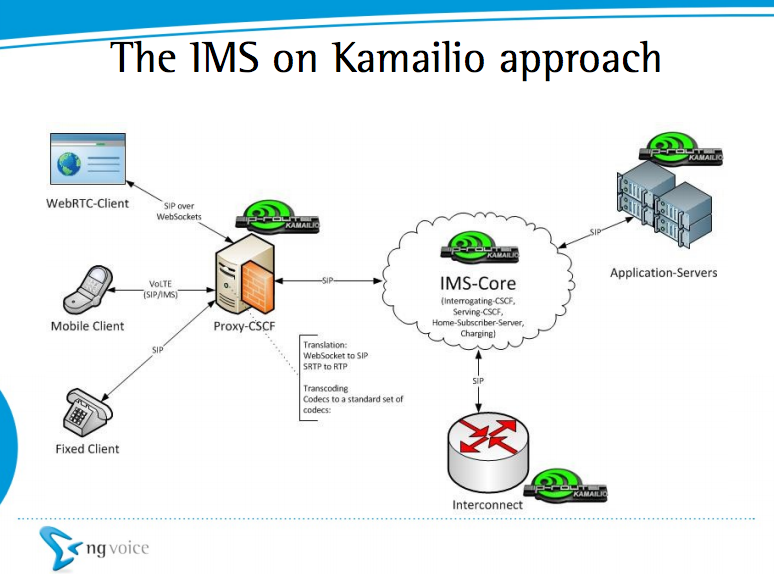
Here is a summary of available IMS modules:
CDP / CDP-AVP
- The CDP (C-Diameter-Peer) modules provide an Diameter-interface, which are used by several components of the OpenIMS-core: They are used as Cx-Interface for the I-/S-CSCF and for the Rx-Interface for the P-CSCF. The modules may be used in other ways, too (e.g. for an Sh-Interface for an Kamailio-based aplication server)
P-CSCF
- The Proxy-CSCF in the IMS Architecture acts as an entry point to the network. The pcscf module of the original OpenIMS-core aggregates many functions required at this component: Header manipulation/verification, RTP-Relay and presence-support for the “reginfo”-event. Optional, the Rx-Interface for Billing may be enabled.
I-CSCF
- The Interrogating-CSCF is a kind of “Loadbalancer” or a entry Proxy for the “home-network” of an IMS setup. The I-CSCF will retrieve the location for a user from the HSS, it will check, where a user is registered or where it should register (based on user-settings, required capabilities later maybe even load). The icscf-module implements the according interfaces towards the HSS (Cx) and according header manipulation/verification methods.
S-CSCF
- The Serving-CSCF is acting as a registrar and as decision engine regarding the routing of the Request. It retrieves the user-data and routing rules from the HSS and applies them to the processed requests. The scscf-module implements the according interfaces towards the HSS (Cx), the interfaces towards application-servers (Isc) and according header manipulation/verification methods.
MGCF
- The MGCF-Module of the OpenIMS core implements header and content manipulation for interconnections towards Class 4 networks.
E-CSCF & LRF
- The Emergency-CSCF and the Location Resource Function (LRF) implements IMS compliant emergency call routing. The modules provide required content aggregation methods.
Friday, December 22, 2006
Kamailio (OpenSER) Summit 2006 - OpenSER IMS
Joachim Fabini of Technical University of Vienna, shared his experiences while implementing a OpenSER-based IMS in CAMPARI project (interesting concept: IMS in a bottle). Along with the architecture and components, very valuable were his conclusions and thought about IMS and future directions of VoIP, where the mobile communication will meet IP world and directions to be approached to ensure success.
A very interesting result of this experiment was that they used Kamailio (OpenSER) barely as it is, with no hacking, IMS components being Kamailio (OpenSER) instances with different config file. The work was a proof of concept, optimization could be brought by code writing.
Download slides of OpenSER IMS.


